FOR PROS

We’ve all seen the HGTV montages. A couple swings a sledgehammer, there’s a quick transition with some upbeat acoustic guitar music, and suddenly—tada!—a $150,000 kitchen appears. But in the real world (especially the real world of 100-year-old stucco homes in South Minneapolis), the budget doesn't always behave.
While the cabinets and appliances get all the glory, it’s the "hidden" costs that usually send a renovation off the rails. If you’re planning a 2026 kitchen remodel in the Twin Cities, here is where your money is actually going.
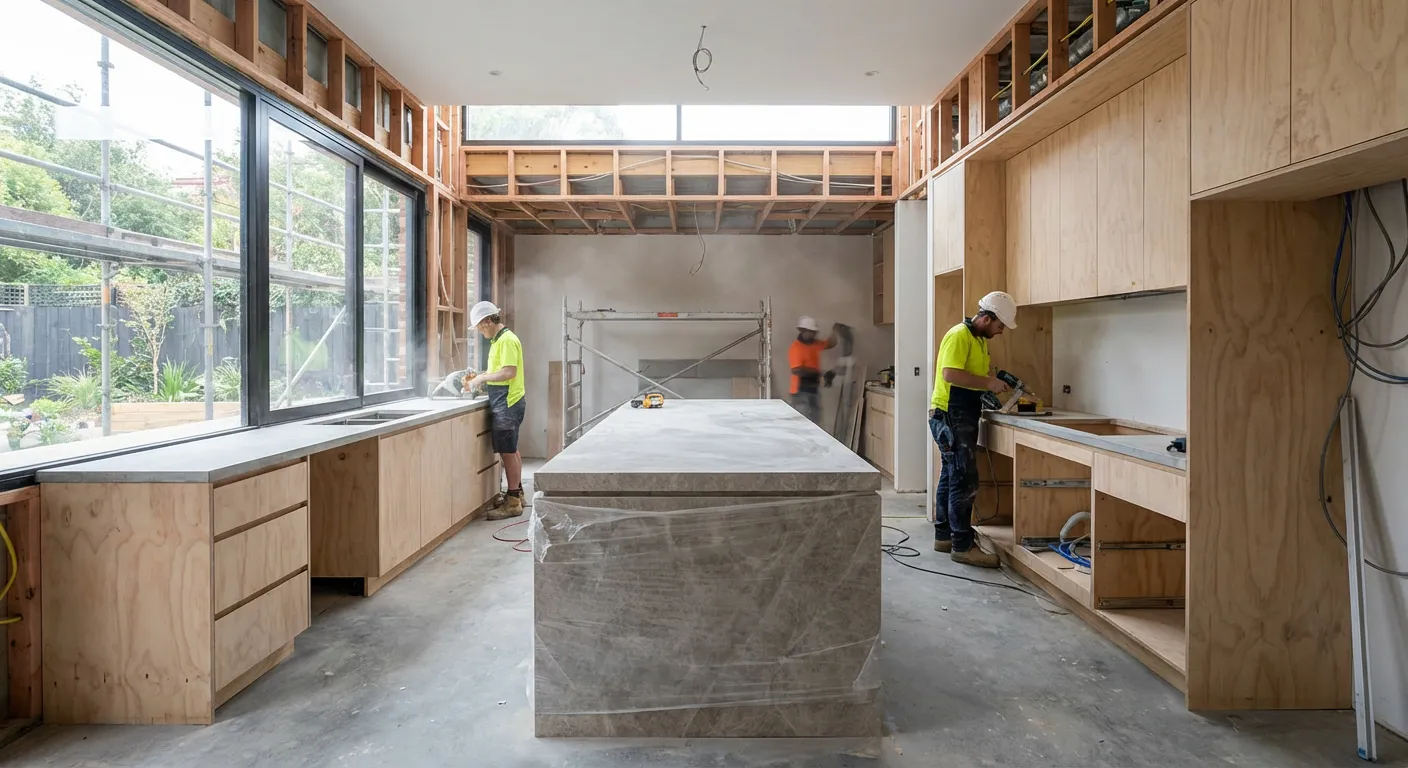
Behind the beautiful backsplash lies the most expensive part of your remodel: the infrastructure.
The Big Three: Cabinets, Counters, and Codes
1. Cabinets: Beyond the Boxes
In 2026, mid-range cabinets for a standard Minneapolis kitchen start at around $20,000. But the hidden cost is the installation and the "frills." Crown molding, light valances, and soft-close hardware can add 15% to your cabinet quote. Pro Tip: In Minnesota, make sure your cabinets are acclimated to your home's humidity for 72 hours before install, or you'll see gaps by February.
2. Countertops: The Fabrication Trap
You might see a slab of Cambria quartz (proudly made in Le Sueur, MN!) priced at $80 per square foot. However, your final bill will likely be $120 per square foot. Why? Fabrication. Sink cutouts, mitered edges, and "templating" fees are almost never included in the initial sticker price.
3. Permits: The "City Hall" Factor
Minneapolis and St. Paul have some of the strictest building codes in the Midwest. A full kitchen remodel in 2026 requires separate permits for structural, electrical, plumbing, and mechanical work. Budget at least $1,500 – $3,000 just for the paperwork and the pleasure of having an inspector tell you your 1940s wiring isn't up to code.

Quartz countertops from local manufacturers like Cambria are a staple of Twin Cities luxury.
Where the Budget Usually Breaks
In my experience with Twin Cities homes, the budget doesn't break because you chose a fancy faucet. It breaks because of The Ghost in the Walls.
When you strip the walls of a classic Kingfield or Highland Park home, you almost always find a "surprise." Maybe it's outdated knob-and-tube wiring that must be replaced by law, or perhaps your floor is two inches out of level (common in Minneapolis clay soil). Leveling a floor so your new island doesn't look like it’s sliding into the dining room can cost $2,000–$5,000 in labor and materials alone.
Insider Knowledge: The "Mechanical" Secret
The HVAC Surprise: If you are removing a wall to "open up" your kitchen, there is an 80% chance there is a massive cold-air return or a plumbing stack hidden in that wall. Relocating these through your second floor or basement can add $4,000 to your budget instantly. Always have your contractor use a thermal camera before you start swinging the hammer!
The "Lead Time" Leak: In 2026, high-end European appliances still have 6-month lead times. If your contractor finishes the kitchen but the fridge is stuck in a shipping container, you’ll be paying for a "temporary" kitchen setup or eating out for months. That "hidden" dining-out cost can easily add $2,000 to your total project spend.
Final Verdict: How to Survive
To avoid a mid-renovation meltdown, the "Minnesota Gold Rule" is to take your contractor's best estimate and add a 20% contingency fund. If you don't use it, you've got a great start on your new furniture. If you do use it, you've saved yourself a lot of stress during the long winter months of construction.